


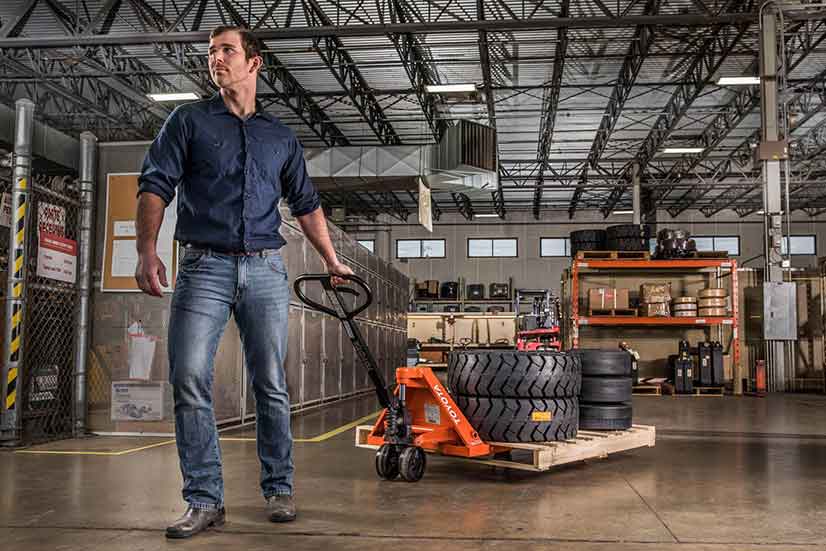
If you work in a warehouse, distribution center, or any industry dealing with heavy loads, you’ve likely encountered a pallet jack. Also known as a pallet truck, hand pallet jack, or pump truck, this essential tool allows for the safe and efficient transportation of palletized goods. Whether you’re a beginner or an experienced operator, this guide provides step-by-step instructions on using a pallet jack correctly while prioritizing safety.
Step 1: Familiarize Yourself with the Pallet Jack
Before operating a pallet jack, take a moment to understand its key components:
- Handle: Controls the direction and movement of the pallet jack.
- Pump Lever: Raises and lowers the forks.
- Forks: The two parallel prongs that slide under the pallet.
- Load Wheels: Support the weight of the load and facilitate movement.
- Steer Wheels: Located at the rear to aid in navigation.
Step 2: Prioritize Safety
Safety is crucial when using warehouse equipment. Follow these guidelines:
- Only trained and authorized personnel should operate a pallet jack. OSHA requires proper operator training. If you’re in Los Angeles County, inquire about forklift operator safety training in Santa Fe Springs. We offer forklift safety training classes in English and Spanish.
- Wear appropriate personal protective equipment (PPE), including safety shoes and gloves.
- Inspect the pallet jack before use. Check for wheel damage, fork bends, or hydraulic leaks.
- Ensure the load weight does not exceed the pallet jack’s capacity.
- Clear any obstructions from your path to prevent accidents.
Step 3: Positioning and Loading
To ensure stability and efficiency:
- Approach the pallet from the side and align the forks with the pallet gaps.
- Fully insert the forks beneath the pallet for proper balance.
- Adjust the forks to match the pallet’s width if needed.
- Ensure the load is evenly distributed to prevent tipping.
Step 4: Lifting and Moving
Once the pallet is secured, follow these steps:
- Stand behind the pallet jack and grip the handle firmly.
- Pump the lever to raise the forks off the ground using smooth, controlled motions.
- Push the pallet jack forward, using your body weight for momentum.
- Steer by turning the handle in the desired direction, maintaining a steady pace.
- Slow down gradually when stopping to avoid sudden jolts that could destabilize the load.
- Use caution around corners and in narrow spaces to prevent collisions.
Step 5: Unloading Safely
When lowering and unloading the pallet:
- Position the pallet jack in the unloading area.
- Slowly lower the forks by operating the pump lever, ensuring the load remains stable.
- Remove the forks carefully once the pallet is securely on the ground.
- If necessary, secure the unloaded pallet using straps or other stabilizing methods.
Additional Tips for Efficient Pallet Jack Operation
- Always push rather than pull the pallet jack when possible—it offers better control and reduces strain.
- Never exceed the rated load capacity to prevent damage or injuries.
- Store the pallet jack in a designated area when not in use to prevent workplace hazards.
Becoming proficient with a pallet jack can greatly improve both efficiency and workplace safety when moving heavy loads. By following these step-by-step guidelines and adhering to essential safety practices, you can confidently operate a pallet jack with expert precision. Always prioritize safety, conduct routine inspections, and pursue professional training when needed to ensure optimal performance.
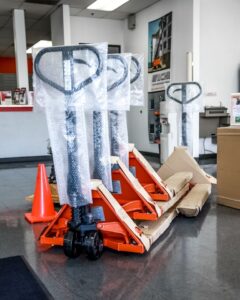
At Toyota Material Handling Solutions, we take pride in offering a wide range of reliable and high-quality pallet jacks for sale for various industries. Our selection includes renowned brands such as Toyota, Tora-Max, Heli, and Noblelift, ensuring you can access the best equipment for your specific requirements. Contact us to get a list of new pallet jacks for sale.
Tags: free resources, productivity, warehouse solutions